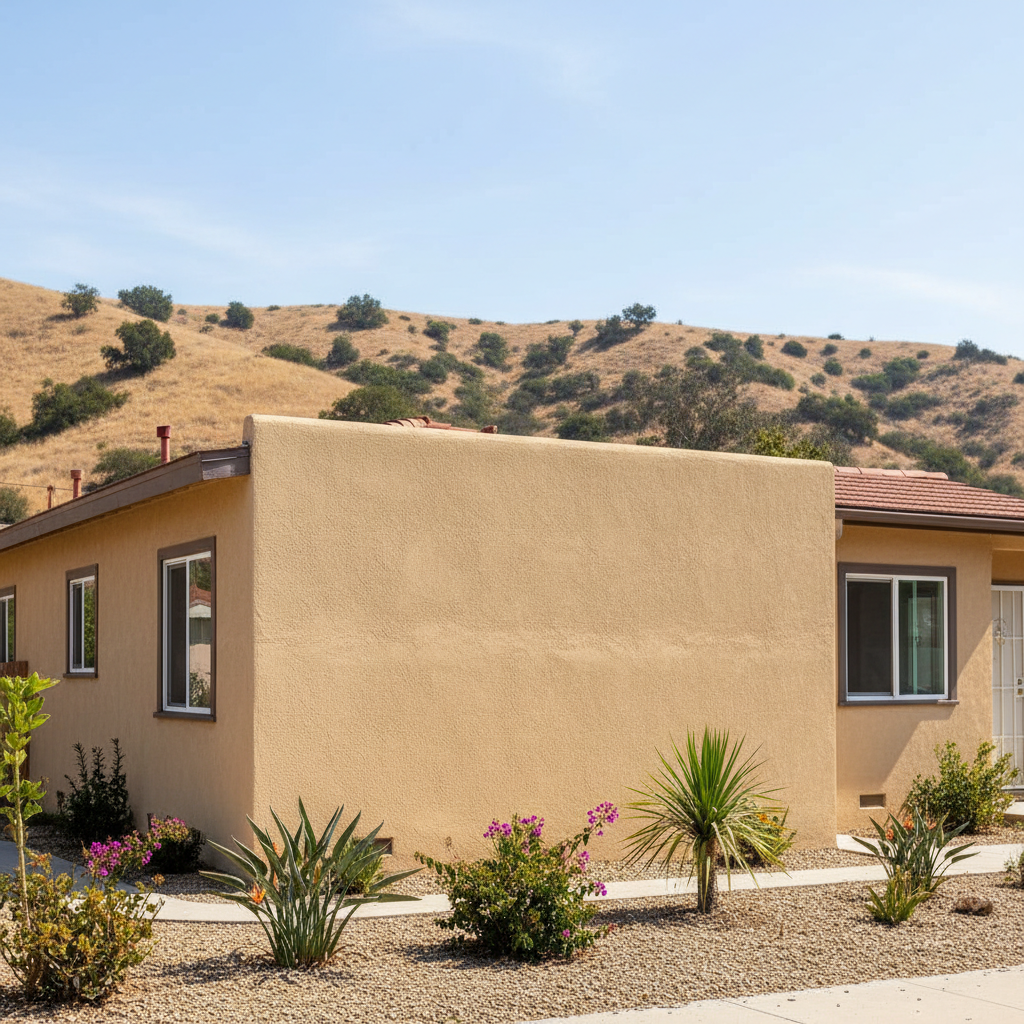
So, you're thinking about giving your stucco a fresh coat of paint? Good call. A quality paint job doesn't just make your place look sharp; it also adds another layer of protection for your stucco, which is super important with all that coastal air we get here in National City. But let's be honest, you really want to know what it's going to cost. I totally get it. Here at National City Stucco & Plastering, we've painted more stucco homes than I can count — from the older spots near Highland Avenue to the brand-new builds down by the Marina. So, I've got a pretty good handle on the numbers.
What Makes Stucco Painting Prices Go Up and Down?
It's never just one thing, right? A few big factors really push the price tag higher or lower. You've got to think about:
How Big Your Home Is: This one's probably the most obvious. A smaller 1,200 sq ft ranch-style house will cost a lot less to paint than a sprawling 3,000 sq ft two-story. We usually quote based on the square footage of the exterior walls, not just the house's footprint.
The Stucco's Current Condition: This is a huge one, and people often forget about it. Is your stucco in good shape? Or are there cracks, efflorescence (those white powdery stains), or peeling paint that needs some serious prep work? If we have to do a bunch of patching, power wash off mildew, or scrape extensively before we even crack open a paint can, that'll definitely add to the labor time and material cost.
What Kind of Paint You Use: Not all paints are created equal, especially for stucco. You really want a high-quality elastomeric or acrylic latex specifically made for masonry. These paints breathe, they're flexible, and they hold up way better against our local weather, resisting cracking and fading. Sure, they cost more upfront than your basic interior paint, but they last much, much longer.
How Many Colors: A single, solid color is always cheaper than a multi-color scheme with trim, accents, and different bands. More colors mean more masking, more cutting in, and just more time, period.
How Easy It Is to Access: Is your house easy to move around? Are there a lot of bushes, fences, or other things in the way? A flat, open wall is quicker to paint than one with intricate architectural details, multiple windows, or spots that need a lot of ladder work — or even scaffolding.
Lead Paint Abatement: For older homes, especially those built before 1978, there's a chance of lead-based paint. If testing confirms it, we're legally required to follow specific, more expensive procedures for removal and containment. This isn't super common for stucco, but it's something to keep in mind.
So, What's the Typical Range You're Looking At?
Alright, let's get down to brass tacks. For a standard stucco painting job in National City, you're generally looking at somewhere between $2.00 to $4.50 per square foot of exterior surface area. This price includes labor, materials (primer, good quality paint), and basic preparation.
For a smaller, single-story home (around 1,200-1,500 sq ft exterior): You might expect to pay in the range of $3,000 to $6,000. This is for a pretty straightforward job with minimal repairs.
For a medium-sized, two-story home (around 2,000-2,500 sq ft exterior): The cost could be anywhere from $5,000 to $11,000. Again, this assumes average condition.
For larger or more complex homes (3,000+ sq ft exterior or significant repairs): You could be looking at $8,000 to $15,000+. Extensive stucco repair, multiple colors, or difficult access will definitely push it towards the higher end.
These are just averages, remember. Your specific quote will depend on all those factors I just talked about.
What Should a Good Quote Include?
When you get a quote, make sure it's detailed. It shouldn't just be a single number. Here's what we always put in ours:
A Detailed Scope of Work: Exactly what's getting painted (walls, trim, fascia, doors, etc.).
Preparation Steps: Power washing, scraping loose paint, patching minor cracks, masking windows and fixtures, covering landscaping.
Materials Specified: The brand and type of primer, and the brand and type of paint (e.g., Sherwin-Williams Loxon XP or Dunn-Edwards Evershield), plus the number of coats (usually two topcoats over primer).
Timeline: Estimated start and completion dates.
Warranty: What's covered and for how long (e.g., 2-5 years on labor and materials).
Total Cost: The final price, including labor and materials, with no hidden fees.
How to Avoid Getting Ripped Off or Overpaying
Nobody wants to feel like they paid too much. Here's my best advice:
Get Multiple Bids: Three quotes is usually a good number. Don't just go with the cheapest; compare what each contractor is actually offering for that price.
Check References and Reviews: See what other folks in National City say about them. A contractor who consistently does good work will have a solid reputation, right?
Ask About Insurance: Make sure they have liability insurance and worker's comp. You definitely don't want to be on the hook if someone gets hurt on your property.
Don't Pay Upfront: A reputable contractor won't ask for the full amount before starting. A reasonable deposit (10-30%) is normal, with progress payments or the final payment due upon completion and your satisfaction.
Be Clear About Expectations: Discuss everything upfront. If you want a specific brand of paint or have concerns about a certain area, bring it up before the work even begins.
Understand the Prep Work: The quality of the paint job is 80% preparation. If a quote seems too low, they might be cutting corners on the prep, and that's exactly where your paint job will fail prematurely.
Painting your stucco is a big investment, but it's totally worthwhile when done right. Take your time, do your homework, and you'll end up with a beautiful, long-lasting finish that protects your home for years to come.