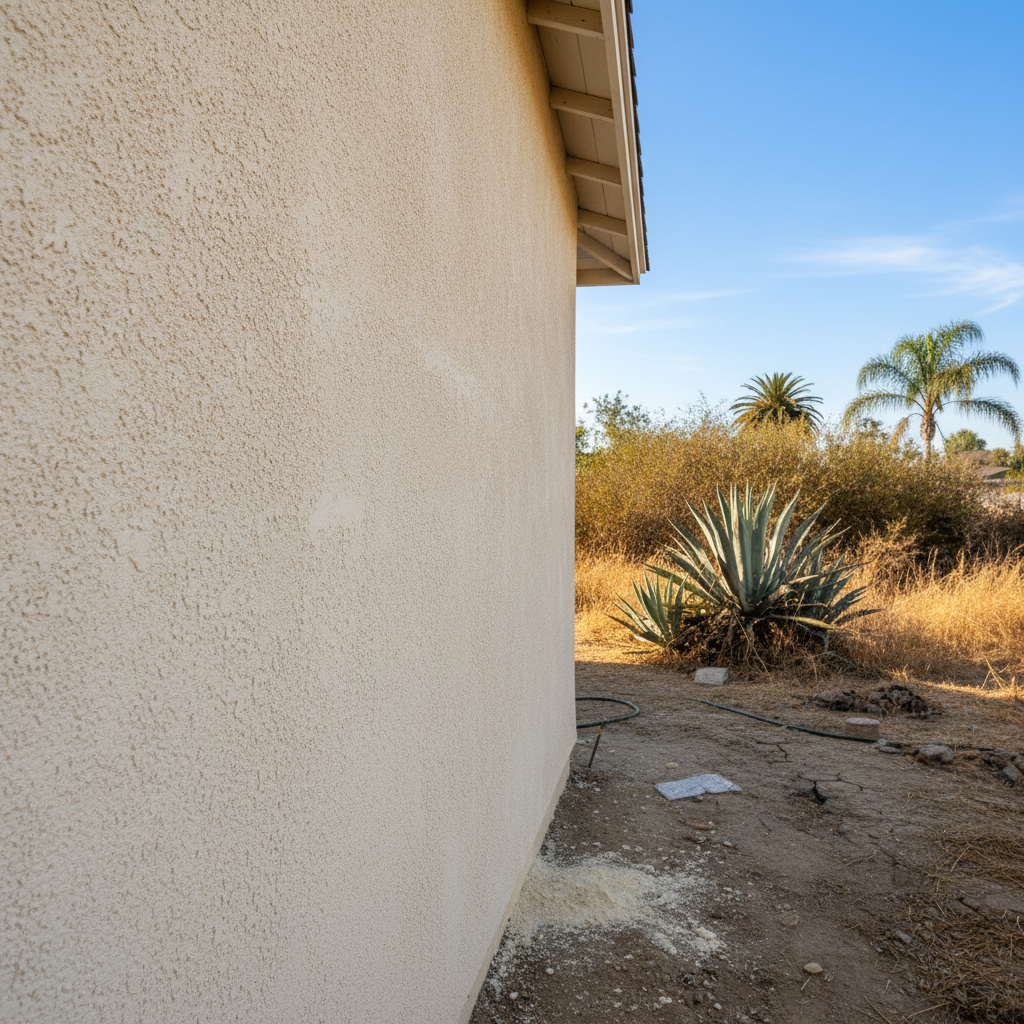
Alright, let's talk stucco repair. I've been doing this for a long time here in National City, and honestly, I hear the same questions from folks over and over again. It's smart to ask, because getting stucco repair right isn't just about making your house look good; it's about protecting your biggest investment, right? So, let's really dig into what you want to know.
What's causing these cracks in my stucco?
This is probably the number one question I get asked. Cracks in stucco can pop up for a few different reasons, and figuring out the 'why' is crucial for a repair that actually lasts. Sometimes, it's just normal house settling. Every house settles a little over time, especially in areas like Paradise Hills where the soil conditions can vary. These are usually hairline cracks, not a huge deal, but you still need to seal them to keep water out.
Then you've got structural cracks. These are usually wider, might run diagonally, and could point to something more serious, like foundation movement. If you spot cracks wider than a credit card or ones that seem to be growing, you absolutely need a professional to take a look. Poor installation is another common culprit – if the stucco wasn't applied correctly, or the lath wasn't fastened right, you'll see problems sooner rather than later. Lastly, water damage can cause stucco to crack and delaminate, which brings us right to the next point.
How do I know if it's just a cosmetic crack or something serious?
Good question. A cosmetic crack is typically a hairline, maybe a sixteenth of an inch wide, often just in the finish coat. You can usually patch these up pretty easily yourself. They don't usually let in a lot of water unless there are a ton of them or they're in a really exposed spot. The serious ones? Those are wider, sometimes a quarter-inch or more. They might go all the way through the stucco layers, or you might see them running from a window or door corner. If you can stick a dime in the crack, or if you notice water stains around it, or if the stucco feels soft or spongy when you press on it, that's a red flag. Don't ignore those, seriously.
Can I just patch it myself, or do I need a pro?
Look, for a tiny, superficial hairline crack, sure, you can probably grab some stucco patch from the hardware store and give it a shot. Just make sure you clean the area well, apply the patch, and try to match the texture as best you can. But for anything beyond that – larger cracks, water damage, delaminated stucco, or if you're not even sure what's causing the issue – you really need a professional. Trying to DIY a bigger repair without understanding the underlying problem can actually make things worse, costing you more in the long run. We've seen plenty of botched DIY jobs that end up needing a full tear-out and re-stucco.
What's involved in a typical stucco repair process?
It depends on the damage, of course, but generally, here's how we approach it at National City Stucco & Plastering. First, we assess the damage to figure out the cause and how bad it is. Then, we remove all the loose, damaged, or compromised stucco. This often means cutting back to solid material, sometimes even exposing the lath and sheathing underneath if there's water damage. We clean the area thoroughly, make sure it's dry, and then apply new stucco in layers – scratch coat, brown coat, and then the finish coat. We're careful to match the existing texture and color as closely as possible. It's a multi-step process that takes time and skill to do right.
How long does stucco repair usually take?
Again, it varies. A small patch job might only take a few hours of actual work, but you've got drying times between coats, so it could easily be a couple of days from start to finish. For more extensive repairs, like fixing a whole section of water-damaged wall, it could take several days or even a week or more. The weather plays a role too; you can't rush the drying process, especially with our occasional marine layer here that keeps things humid. We always give you a clear timeline upfront.
Will the repaired area match my existing stucco?
That's the goal, and a good contractor will strive for an invisible repair. But let's be honest, it's not always 100% perfect, especially on older stucco. We do our absolute best to match the texture and color. We'll often take samples of your existing stucco to get the mix just right. Sometimes, if your stucco is very old or faded, the new patch might look a little brighter initially. Over time, with sun exposure and weathering, it usually blends in much better. If you're super particular about a perfect match, sometimes the best option for larger areas is to re-stucco the entire wall or even the whole house after the repair, but that's a bigger conversation.
Don't let stucco problems fester. They rarely get better on their own, and usually just get more expensive to fix, believe me. If you've got concerns, get them checked out.